Plenty of parents genuinely try their best teaching Noorani Qaida at home, and still end up with a child who’s stuck on the same page for months. It’s rarely a lack of effort. It’s usually one of a small handful of patterns that show up again and again, in almost every home-taught situation. Here they are, honestly, along with what actually helps instead.
1. Rushing to the Next Page Too Soon
The single most common mistake. A page gets “good enough,” and everyone moves on before it’s actually solid. The problem is that Noorani Qaida is built in layers, and a shaky layer near the bottom makes everything built on top of it shaky too. Better to spend an extra week on a page than to carry a weak foundation into the next twenty.
2. Skipping Revision of Old Lessons
Starting straight into new material every single time, with no time spent reviewing what was covered last week, is a fast way to lose progress quietly. Five to seven minutes reviewing yesterday’s page before starting anything new makes a genuinely noticeable difference over a few months, even though it feels like it’s “wasting” time in the moment.
3. Teaching Letter Names Instead of Letter Sounds
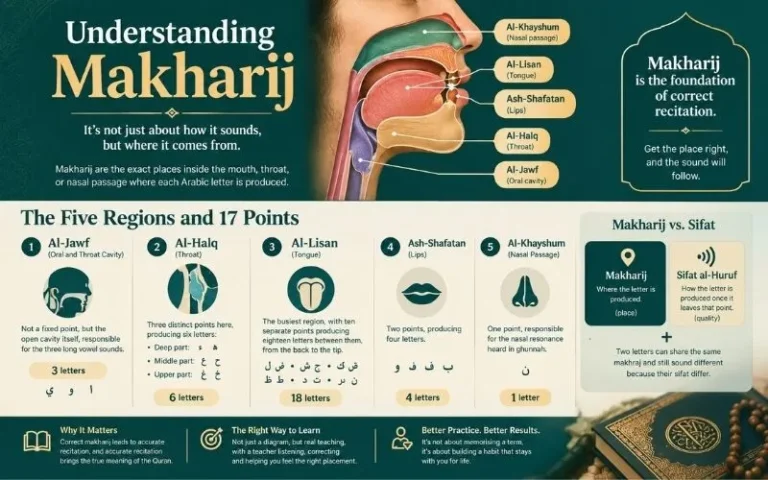
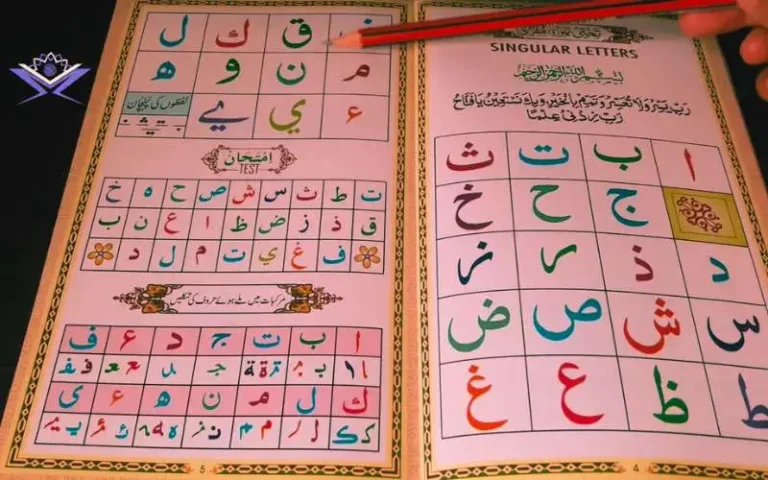
This one’s easy to fall into without realising it. A child who can recite “Alif, Ba, Ta, Tha” perfectly isn’t necessarily a child who can actually produce those sounds correctly inside a word. Names are just labels. What actually matters for reading is the sound itself, and specifically where in the mouth or throat it’s produced.
4. Letting Small Mispronunciations Slide
If a child says a letter slightly wrong and nobody corrects it in that exact moment, the mistake doesn’t just disappear, it settles in. The longer it goes unnoticed, the more natural it starts to feel, and the harder it becomes to unlearn later. Gentle, immediate correction, every single time, matters far more than it seems to in the moment.
5. Not Knowing Which Letters Actually Need Extra Attention
A handful of Arabic letters simply don’t exist in English, and they’re the ones that quietly get mispronounced most often without anyone noticing: ع, ح, خ, غ, ص, ض, ط, ظ. Without knowing to listen out for these specifically, it’s genuinely easy for a parent to miss a consistent mistake that a trained ear would catch immediately.
6. Confusing Similar-Sounding Letters
Certain pairs get mixed up constantly, particularly س and ث, or ذ and ز. These aren’t obvious mistakes from a distance. They require someone listening closely and specifically checking for them, which is hard to do consistently as a parent teaching from a book at the kitchen table.
7. Prioritising Speed Over Accuracy
Finishing the book quickly feels like progress, and it’s tempting to treat it as the goal. But a child who races through Noorani Qaida with accumulated mistakes is genuinely worse off than one who takes longer and reads it properly. There’s no real prize for finishing fast if what’s left behind is a habit of misreading.
8. Stopping Completely Once the Book Is Finished
Finishing Noorani Qaida understandably feels like the finish line, and it’s common for lessons to just stop there. But without continued reading practice straight after, reading speed and accuracy can genuinely start slipping backwards within weeks. The real finish line is fluent, correct reading of the Quran itself, not just completing the book.
What Actually Helps
None of these mistakes come from a lack of care. They come from not having someone trained to catch them in real time. A teacher who’s actually listening, lesson after lesson, notices these patterns immediately and corrects them before they become habits, which is genuinely the whole value of proper one-to-one teaching over self-study at home.
Frequently Asked Questions
Is it normal for a child to make mistakes while learning Noorani Qaida?
Yes, completely normal. What matters is whether mistakes get corrected quickly, not whether they happen at all.
How do I know if my child is progressing too fast through Noorani Qaida?
If they’re moving to new pages without being able to read the previous ones confidently and accurately, that’s usually a sign of rushing rather than genuine progress.
Can I fix these mistakes myself without a teacher?
To some extent, yes, with real attention and patience. But certain mistakes, especially with letters that don’t exist in English, are genuinely hard to catch without training.
What should I do once my child finishes Noorani Qaida?
Move straight into structured reading practice rather than stopping. Reading ability fades quickly without continued use.
Want a Real Teacher Catching These Mistakes?
Explore our Noorani Qaida course and book a free trial lesson before they become habits.