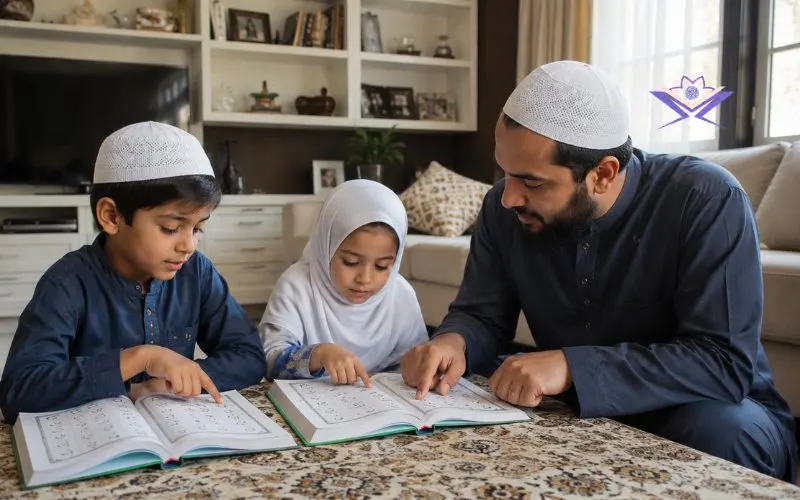
A lot of parents want to give their child a head start before their first Noorani Qaida lesson even begins. That’s a genuinely good instinct, and if you’re looking into how to teach the Arabic alphabet at home properly, there’s a right way and a wrong way to go about it. Get it wrong, and you can accidentally teach habits a real teacher then has to spend weeks undoing.
Here’s what actually helps, and what to leave for the teacher.
Start With Recognition, Not Writing
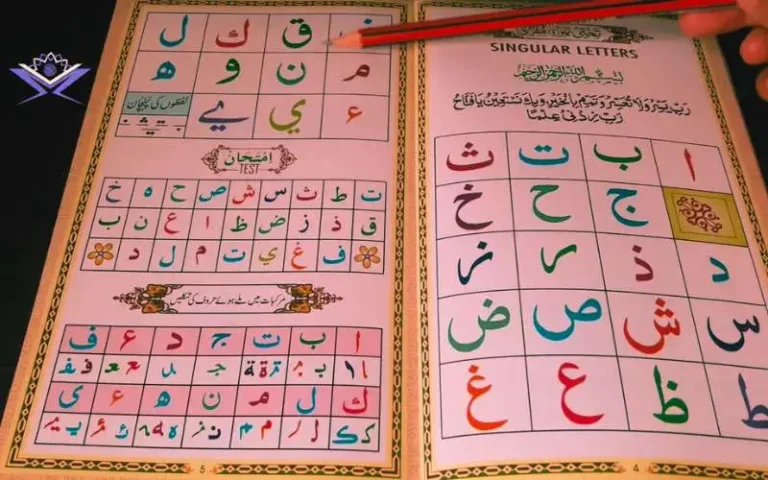
Before a child can write Arabic letters neatly, they need to recognise them by sight and sound. That’s the actual first step, and it’s the one most home-taught children skip straight past.
Point to a letter. Say its name. Ask your child to find the same letter elsewhere on the page. That’s it. No writing practice needed yet, no pressure to get every letter memorised in a week. Just repeated, relaxed exposure.
Keep Sessions Genuinely Short
Ten minutes is plenty for a young child. Fifteen if they’re really enjoying it. Anything longer, and you’re not teaching anymore, you’re just testing their patience, and the letters start to become associated with boredom rather than curiosity.
A short session most days beats one long session once a week, every time. This isn’t specific to Arabic either, it’s just how small children actually learn anything.
Don’t Worry About Pronunciation Yet
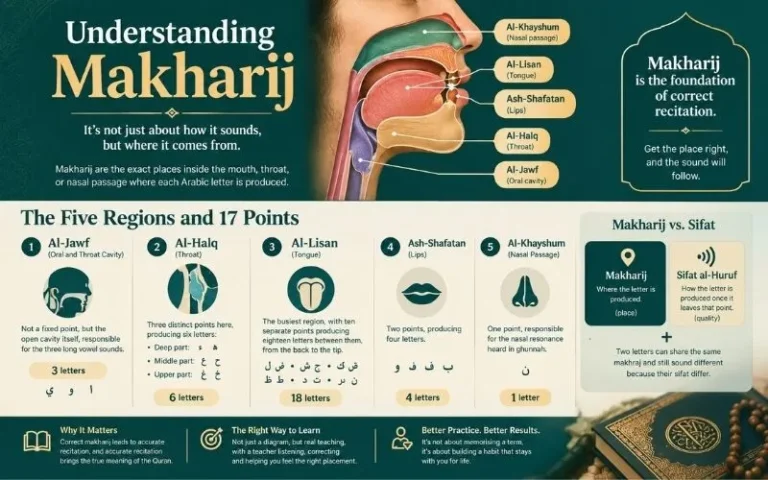
This is the part most parents get wrong without realising it, and it’s worth saying plainly: unless you’re confident your own Arabic pronunciation is accurate, don’t spend weeks drilling sounds at home. Certain letters simply don’t exist in English, and if you’re not sure exactly where in the mouth a letter like ع or ص is supposed to come from, you can end up teaching your child a habit that a real teacher then has to gently correct later.
Recognition and familiarity at home is genuinely useful. Precise pronunciation is better left to a qualified teacher who can hear your child directly and correct them in the moment, rather than a parent guessing based on a video.
Use What’s Actually Around the House
You don’t need expensive flashcards. A printed Arabic alphabet chart stuck somewhere your child walks past daily works just as well, if not better, because it turns into passive, repeated exposure rather than a formal “lesson” your child has to sit through.
Pointing out letters on the cover of the family Quran, or on a wall hanging, works the same way. Familiarity builds quietly, in the background, without turning into a chore.
What to Genuinely Leave for the Teacher
- Correct pronunciation (Makharij) — where exactly a sound is produced
- Joined letter forms — how a letter changes shape depending on where it sits in a word
- Tajweed rules — anything beyond simple letter recognition
Trying to cover these at home, without training, is where good intentions can quietly cause more work later rather than less.
How Long Should This Take?
There’s no fixed timeline, and anyone promising one is guessing. Most children who get relaxed, regular exposure at home for a few months arrive at their first proper Noorani Qaida lesson already comfortable recognising letters by sight, which genuinely does help their teacher move faster from day one. It’s a head start, not a replacement for proper teaching.
Frequently Asked Questions
What age should I start showing my child the Arabic alphabet?
There’s no strict rule, but most parents start somewhere around age three or four, purely through casual exposure rather than formal teaching. Structured lessons usually begin a little later, around four to five.
Should I teach my child to write the letters before lessons start?
It’s not necessary, and it’s often better not to. Recognition comes first. Writing practice is something a teacher can introduce properly once your child already knows the letters by sight.
Is it harmful if I mispronounce a letter while teaching at home?
It’s not the end of the world, but it can create a habit that takes longer to correct later. If you’re not confident in your own pronunciation, focus on letter recognition only, and leave pronunciation to a qualified teacher.
How do I know if my child is ready for their first Noorani Qaida lesson?
If they can recognise most of the Arabic alphabet by sight and sit through a short activity without losing interest, they’re genuinely ready to start.
Ready for the Next Step?
Explore our Noorani Qaida course and book a free trial lesson with a real teacher.