
The short answer: A noon or meem with no vowel on it (a sukoon) changes how it sounds depending on the letter that comes straight after it. For noon sakinah and tanween there are four outcomes: Izhar (say it clearly), Idgham (merge it), Iqlab (turn it into a meem) and Ikhfa (half-hide it). For meem sakinah there are three. Ask one question every time, which letter comes next?, and the answer tells you which rule you’re in.
Most people meet these rules on a colourful Tajweed chart and feel their brain slide off the page. Four Arabic names, fifteen letters in one group, a “ghunnah” nobody explained properly. It looks like a memory test.
It isn’t one. It’s a sorting job, and once you see how the sorting works, it’s one of the more logical parts of Tajweed. Let’s do it properly.
Quick summary
- Noon sakinah is a noon with no vowel. Tanween is the “n” sound at the end of a word, written as double vowel marks. Both follow the same four rules.
- The rule depends only on the letter that comes next, even if it starts the next word.
- The letters split 6 + 6 + 1 + 15 = 28, which is the whole Arabic alphabet.
- Meem sakinah has three rules: hide it before ب, merge it before م, and say it clearly before everything else.
- Ghunnah is the soft nasal hum. Where it applies, hold it for about two counts.
- You can learn the rules from a page. You can only learn the sounds from a teacher who hears you.
First, What Are We Even Talking About?
A noon sakinah is a ن with a sukoon (the small circle) on it, so it carries no vowel of its own. Tanween is the extra “n” sound that closes many Arabic nouns, written as double vowel marks, like the ones you see on kitabun, kitaban and kitabin. You don’t write a noon for it, but you say one. For the purposes of these rules, tanween behaves exactly like a noon sakinah.
A meem sakinah is the same idea with a م: a meem with a sukoon on it.
These two sounds are slippery. Say “n” or “m” on their own and you can feel the mouth getting ready for whatever follows. Tajweed gives that natural tendency four clear outcomes for the noon and three for the meem, so every reciter does the same thing every time.
You Already Do This in English (Without Noticing)
This is the part that usually makes it click.
Say the word ink. The “n” isn’t really an “n” at all. Your tongue is already moving towards the “k”, so the sound slides into a back-of-the-mouth “ng”. Now say input quickly. Most people say “imput”. The “n” has turned into an “m” because a “p” is coming and the lips are getting ready.
English speakers bend their sounds towards the next letter all day long. Arabic does the same thing, except Tajweed writes the rules down so nobody has to guess. Think of the four noon rules as four tidy versions of what your mouth already wants to do.
They aren’t identical to English habits, so don’t lean on this too hard. But it explains why the rules feel natural once you hear them.
The One Question That Decides Everything
Look at the letter right after the noon sakinah or tanween. That’s all. Then sort it:
- A throat letter? It’s Izhar.
- The letter ب? It’s Iqlab.
- One of the six letters in يرملون? It’s Idgham.
- Anything else? It’s Ikhfa.
That’s the whole decision tree. Here it is as a table:
Count the letters: 6, then 4 plus 2, then 1, then 15. That’s 28, the entire alphabet. Nothing is left over, so there’s always exactly one answer.
Izhar: Say It Clearly
What happens: the noon is pronounced clearly, with no hum and no blending.
When: before the six throat letters: ء ه ع ح غ خ.
Why: these letters come from deep in the throat, far from where the tongue makes a noon. There’s no way for the two sounds to lean on each other, so the noon simply stays itself.
Real examples:
- مَنْ آمَنَ (man amana)
- أَنْعَمْتَ (an’amta), the word from Surah Al-Fatiha
- مِنْ خَيْرٍ (min khayr)
- عَلِيمٌ حَكِيمٌ (‘alimun hakim)
What to listen for: a short, crisp “n”. No nasal tail afterwards. Beginners often add a little hum out of habit, and it turns Izhar into something else.
Idgham: Merge It
What happens: the noon melts into the next letter. You don’t say the noon separately. You say the next letter once, a little stronger.
When: before the six letters of the word يرملون (yarmaloon): ي ر م ل و ن.
It comes in two flavours:
With ghunnah (ي ن م و). The noon dissolves, but a soft nasal hum stays for about two counts. A count is one steady beat, roughly the time it takes to say a short word at an easy pace.
- مَنْ يَقُولُ (man yaqulu)
- مِنْ وَالٍ (min wal), from Surah Ar-Ra’d
Without ghunnah (ل and ر). The noon vanishes completely. No hum. The tongue goes straight on.
- مِنْ رَبِّهِمْ (min rabbihim)
- هُدًى لِلْمُتَّقِينَ (hudan lilmuttaqin)
The mistake we hear most: adding a hum before ل or ر. If it’s a lam or a ra, there’s no ghunnah.
One exception worth knowing: when the noon and the letter (و or ي) are in the same word, as in دُنْيَا (dunya), there’s no Idgham. The noon stays clear. It’s a small point, but it saves a lot of confusion later, and it’s the sort of thing a teacher will flag the first time it appears.
Iqlab: Flip It
What happens: the noon turns into a meem sound, with a nasal hum for about two counts. The lips close gently, not hard.
When: before one letter only: ب.
Real examples:
- مِنْ بَعْدِ (min ba’di), which you’ll meet constantly
- سَمِيعٌ بَصِيرٌ (sami’un basir)
Many printed copies of the Quran put a tiny meem above the noon as a reminder. Markings differ between printings, so ask your teacher what yours show.
This is the English input → “imput” idea in a clean form. It’s also the rule beginners enjoy most, because it’s the only one with a single trigger letter.
Ikhfa: Hide It
This is the biggest group and the one that trips people up.
What happens: the noon is neither fully said nor fully merged. It’s half-hidden. The tongue moves towards the position of the next letter without quite touching the spot where a noon would be made, and a soft hum carries through for about two counts.
When: before the remaining fifteen letters: ت ث ج د ذ ز س ش ص ض ط ظ ف ق ك.
Real examples:
- إِنْ كُنْتُمْ (in kuntum)
- مِنْ قَبْلُ (min qablu)
- أَنْزَلْنَاهُ (anzalnahu), from the very first verse of Surah Al-Qadr
- مِنْ شَرِّ (min sharri)
A useful detail: the hum isn’t identical every time. Before heavy letters like ق, the sound sits deeper and fuller. Before light letters like ك or س, it’s lighter. That’s why one flat “hmm” for every Ikhfa gives itself away.
How to remember the fifteen: students in the classical tradition learn them from a short line of poetry, where the first letter of each word is one of the fifteen:
صِفْ ذَا ثَنَا كَمْ جَادَ شَخْصٌ قَدْ سَمَا دُمْ طَيِّبًا زِدْ فِي تُقًى ضَعْ ظَالِمَا
You don’t have to memorise the verse on day one. Just know the group exists and that it’s “everything else”.
Meem Sakinah: Three Rules, Not Four
A meem with a sukoon has fewer choices.
“Shafawi” just means “of the lips”, because the meem is a lip letter.
One note on Izhar Shafawi: take a little extra care when the next letter is و or ف. Because those also use the lips, it’s tempting to blur the meem into them. Keep the meem clear and finish it before moving on.
What Ghunnah Actually Is
Ghunnah is the soft nasal sound that rings through the nose. You can feel it by humming a gentle “mmm” and noticing the vibration behind your nose.
In these rules, it runs for about two counts when it applies: Idgham with ghunnah, Iqlab and Ikhfa for the noon, and Ikhfa Shafawi and Idgham Shafawi for the meem. It doesn’t apply to Izhar, and it doesn’t apply to Idgham before ل or ر.
Counts vary slightly between recognised recitation styles. Most UK students learn the one called Hafs, and the counts here follow that.
The Mistakes We See Over and Over
These come up in nearly every beginner’s first few lessons:
- Hum in the wrong place. Adding ghunnah to Izhar, or before a lam or ra.
- Too short. Cutting the hum to a flick, when it should last about two counts.
- Ikhfa said like Izhar. The noon gets pronounced fully, so the “hiding” never happens.
- Iqlab with a hard meem. Pressing the lips together firmly instead of closing them softly.
- One flat ghunnah for everything. The sound should follow the letter that comes next.
- Missing it across words. The rule applies even when the next letter starts the next word, so you have to read ahead.
None of these are character flaws. They’re the normal first-draft version of the skill.
How to Spot Them in the Mushaf
Three habits help:
- Scan for the sukoon or the tanween. Wherever you see a noon with no vowel, or a double mark at the end of a noun, a rule is in play.
- Read one letter ahead. Look at what follows before you say the noon.
- Notice what’s missing. In many printings, a noon that is merged or hidden loses its sukoon, and the letter after an Idgham may carry a shaddah. Printing styles differ, so treat these as clues, not guarantees.
A Quick Self-Check
Cover the answers and try these. What happens to the noon in:
- مِنْ بَعْدِ
- مِنْ رَبِّهِمْ
- مِنْ خَيْرٍ
- إِنْ كُنْتُمْ
Answers: 1) Iqlab, since ب follows. 2) Idgham without ghunnah, since ر follows. 3) Izhar, since a throat letter follows. 4) Ikhfa, since ك is in the fifteen.
If you got three or four right, you’ve understood the logic. The sounds are the next step.
Why Reading About It Isn’t Enough
You can know the rule perfectly and still say it differently from how it’s meant to sound. Ghunnah length, the softness of the hum and the position of the tongue in Ikhfa are all things you can’t hear in your own voice. That’s true of almost every part of Tajweed, which is why we talk about it in our piece on the difference between reading the Quran and reciting it properly.
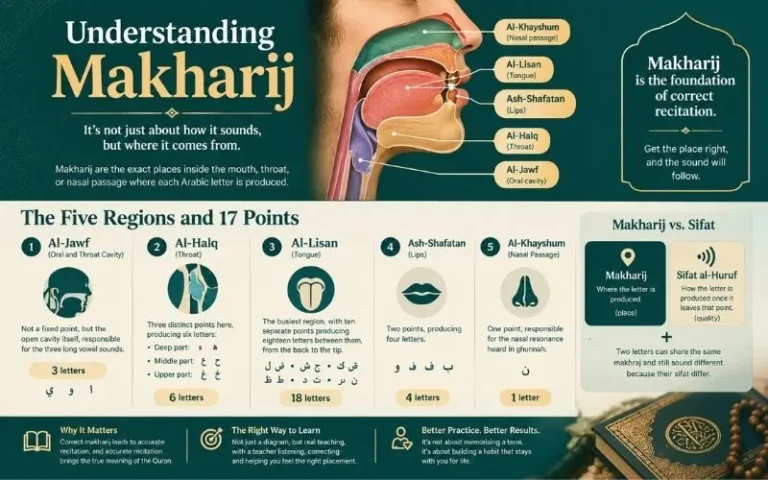
If you want the full map these rules sit inside, start with our beginner’s guide to the rules of Tajweed. And if the throat letters in Izhar felt unfamiliar, our guide to Makharij and why where a letter comes from matters explains why.
Learning These With a Teacher
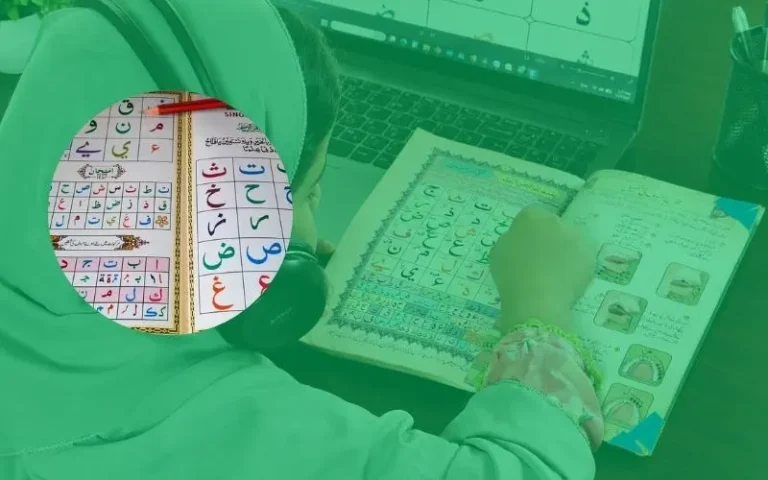
In our Quran reading course with Tajweed, noon and meem rules are taught one at a time, each practised on real verses before the next is added. The teacher listens to your hum, your timing and your tongue position, and corrects them live. You can see everything else we offer on our homepage for online Quran classes for kids and adults, and check the fees before you book.
Want a Teacher to Hear Your Noon and Meem Rules?
Book a free trial and read with someone who corrects as you go. No card required.
Book Your Free Trial →Frequently Asked Questions
What is Noon Sakinah?
Noon Sakinah is the letter ن carrying a sukoon, meaning it has no vowel of its own. Its sound changes depending on the letter that follows, according to four Tajweed rules: Izhar, Idgham, Iqlab and Ikhfa.
What is the difference between Noon Sakinah and Tanween?
Noon Sakinah is a written noon with no vowel. Tanween is the “n” sound at the end of a noun, written as double vowel marks. They’re written differently but follow the same four rules.
What are the four rules of Noon Sakinah and Tanween?
Izhar (pronounce clearly), Idgham (merge into the next letter), Iqlab (change into a meem) and Ikhfa (half-hide with a nasal sound). Which one applies depends on the letter that comes next.
How many Meem Sakinah rules are there?
Three: Ikhfa Shafawi (before ب), Idgham Shafawi (before another م) and Izhar Shafawi (before all other letters).
What is Ghunnah and how long is it?
Ghunnah is the soft nasal sound produced through the nose. Where it applies, it’s held for about two counts. The counts here follow the Hafs recitation, which most UK students learn.
Which letters are Ikhfa letters?
There are fifteen: ت ث ج د ذ ز س ش ص ض ط ظ ف ق ك. Any letter that isn’t covered by Izhar, Idgham or Iqlab falls under Ikhfa.
Is there ghunnah in Idgham?
In some cases. Idgham before ي ن م و keeps the ghunnah. Idgham before ل and ر has none.
Can I learn these rules without a teacher?
You can learn the theory from a book or video. But the hum, its length and the position of the tongue need a live listener to correct, because you can’t judge them reliably from your own voice.